Jeju Island

Cheju Island, alternately known as Chejudo or Jejudo, is an oval-shaped volcanic landmass covering 1,845 square kilometers (712 square miles) off the southern tip of the Korean Peninsula.

Jiuzhaigou Valley of China

Jiuzhaigou, which means "Valley of Nine Villages", is regarded as one of the most beautiful place in China. This nature reserve is located on the north of Sichuan province in central China, bordering on Tibet.

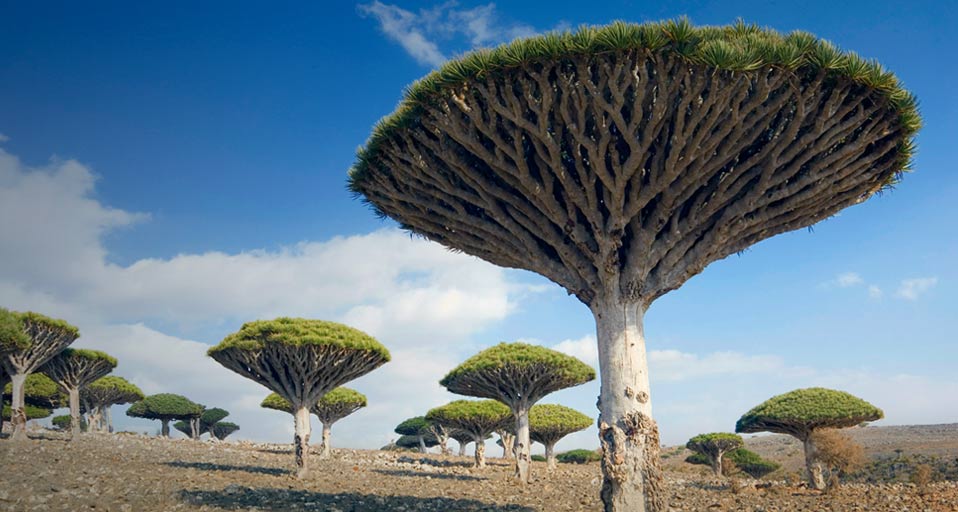
Socotra Island, Yemen

Socotra Island is an attractive natural landscape. God bestowed it with distinct bio-diversity rich in creatures and beautiful plants..

Manafaru Beach of Maldives

Manafaru Beach (5star Hotel) sits at the most northerly tip of the Maldives, idyllically set on a 14 hectares of private island within the unspoiled beauty of the Haa Alif atoll in northern Maldives, is surrounded by a colorful coral reef worth exploring and little explored by foreigners and totally un-polluted by the noise of passing speedboats and is just about the most tenuous country on Earth.

Showing posts with label Chile. Show all posts

Cordillera Del Paine

11:12 PM

Mountains are considered to be one of the most magical out of all nature’s delights. They have a unique and rare charm to them that combine beauty with adventure. Besides mountains are also said to be symbolic of being perseverant and dedicated to achieve all goals set in life. A perfect example to all this is the Cordillera del Paine in Chile.

Torres del Paine National Park is a large park of 2,400 km² and a popular trekking destination with a large number of mountains, lakes and rivers, and biodiversity from sub-polar forests to coastal desert.

The best-known and most spectacular summits are the three Towers 
of Paine. They are gigantic granite monoliths shaped by the forces of glacial ice. Other summits include the Cuerno Principal, about 2,100 m but often quoted at 2,600 m, and Cerro Paine Chico, which is usually correctly quoted at about 2,650 m.

The Cordillera del Paine Mountains that belong to the Andes form the core of the park. The national park was founded in 1959 and renamed Torres del Paine in 1970. It was granted a UNESCO World Biosphere Reserve status in 1978 and today, Torres del Paine National Park is a popular outdoor activity destination with good basic services for visitors.

Torres means "towers" and paine means "blue," a reference to the blue hue of the park's glacial lakes and its four main glaciers, which are connected to the Southern Patagonia Icefield. The city of Punta Arenas, a four-hour flight from Santiago, serves as the central Torres del Paine hub. From there, catch a three-hour bus ride to Puerto Natales and then let your interests dictate the way you access the park, from the luxe (sailing) to the DIY (hopping another bus to one of the three entrances).

Safety & restrictions
Torres del Paine is a safe destination with no crime problems, but the extreme weather conditions can cause danger. Hikers in the national park should always stay on paths and camp in designated areas only. Wood fires are prohibited because of the big risk of forest fires.

The World's Largest Swimming Pool of Chile

11:26 AM

With eight hectares in size and contains an incredible 250,000 cubic metres of water, this artificial lagoon and swimming pool is already drawing the crowds in the South American resort of San Alfonso del Mar in Chile. The revolutionary clear water artificial lagoons, transparent to a depth of 35 metres and unprecedented in design and construction methods, are the brainchild of Crystal Lagoons founder, biochemist and Chilean businessman Fernando Fischmann.
You may think those Olympic sized swimming pools on TV during the summer games are impressive. At about 50 feet by 25 feet, these pools are more than twice the size of your standard in-ground swimming pool, which is usually around 12 feet by 24 feet. But, even the Olympic pool pales in stature to the mother of all swimming pools found at the San Alfonso del Mar resort in Chile.

This vast pool, which was recently recognized by the Guinness Book of World Records as the largest pool in the world, lies beside the Pacific Ocean in Chile. The pool measures an incredible 1,000 meters in length, covers an astounding 20 acres, has an enormous 115 ft deep end. Not surprisingly, the pool takes quite a bit of water to fill it. In fact, it holds a total of 66 million gallons of water. The seawater pool is drawing crowds from all over, if for no other reason than its massive size.
Since its construction, the enormous man-made lagoon has been attracting both locals and tourists to the San Alfonso Del Mar resort at Algarrobo, which lies on Chile's southern coastline. The pool relies on a computer operated suction and filtration system to keep the water fresh and clear.

The water used to fill the pool is constantly pumped in from the Pacific Ocean, which can be found right next door to the pool, and it is later released back into the sea at the other end of the pool. Since the pool is still smaller than the sea, the sun is able to warm the water to about nine degrees above that of the neighboring sea and maintains a 26 degree Celsius temperature (almost 79 degrees Fahrenheit).


  • Followers