Jeju Island

Cheju Island, alternately known as Chejudo or Jejudo, is an oval-shaped volcanic landmass covering 1,845 square kilometers (712 square miles) off the southern tip of the Korean Peninsula.

Jiuzhaigou Valley of China

Jiuzhaigou, which means "Valley of Nine Villages", is regarded as one of the most beautiful place in China. This nature reserve is located on the north of Sichuan province in central China, bordering on Tibet.

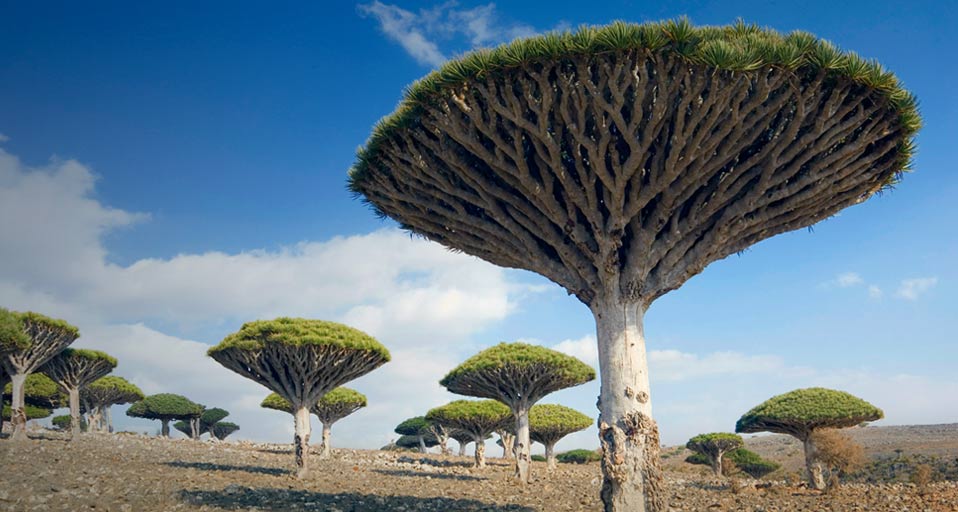
Socotra Island, Yemen

Socotra Island is an attractive natural landscape. God bestowed it with distinct bio-diversity rich in creatures and beautiful plants..

Manafaru Beach of Maldives

Manafaru Beach (5star Hotel) sits at the most northerly tip of the Maldives, idyllically set on a 14 hectares of private island within the unspoiled beauty of the Haa Alif atoll in northern Maldives, is surrounded by a colorful coral reef worth exploring and little explored by foreigners and totally un-polluted by the noise of passing speedboats and is just about the most tenuous country on Earth.

Showing posts with label Philippines. Show all posts

Puerto Princesa Underground River

6:31 AM

The Puerto Princesa Subterranean River National Park ( Also previously known as the St. Paul subteranean river) is a UNESCO World Heritage Site located about 50 kilometers north of the city of Puerto Princesa in the province of Palawan, Philippines. It contains the renowned Subterranean River, thought to be the longest navigable underground river system in the world. The National Park is part of the Saint Paul Mountain Range situated on the northern coast of the island.

The Puerto Princesa Subterranean River National Park features a limestone karst mountain landscape with an 8.2 km. navigable underground river. A distinguishing feature of the river is that it winds through a cave before flowing directly into the South China Sea. It includes major formations of stalactites and stalagmites, and several large chambers. The lower portion of the river is subject to tidal influences. The underground river is reputed to be the world's longest.

The area also represents a significant habitat for biodiversity conservation. The site contains a full mountain-to-the-sea ecosystem and has some of the most important forests in Asia.

Tourism

Because of its natural wonders, the Puerto Princesa Subterranean River National Park is a key destination for local and international tourists alike. According to the Palawan Council for Sustainable Development website, the park gets an annual income of about Php 5 million. This finances the maintenance, managed by the Protected Areas Management Board (PAMB) headed by the City Government of Puerto Princesa.

Travel Advisory


In order to get to the National Park, you must take the Puerto-Roxas road which goes all the way to Sabang, where the park is located. There are also daily buses which leave Puerto Princesa's San Jose bus terminal at 7am, and fare costs are at around Php 300. Two or three jeepneys also take the same route, leaving the terminal at the same time, but are cheaper at Php 200. Trips take three hours.

To explore the Subterranean River, one must secure a permit at the Tourist Information and Assistance Center at the Sabang pier. This costs Php 150 for Filipinos and Php 200 for foreigners. The office can also arrange boat transport to the river (round trip P700, 15 minutes). Then after a five minute walk to the actual entrance, you will be given a lifejacket and helmet, and assigned a boat and driver for the trip to the cave.
The boat ride takes you inside the cave for only about 5 kilometers, since beyond this the river becomes difficult to navigate. The round trip takes about 45 minutes. Cameras are allowed.

History

The PPSRNP was established on March 26, 1971, by virtue of Presidential Proclamation No. 835 issued by the late President Ferdinand E. Marcos. Formerly known as the St. Paul Subterranean National Park, it initially comprised of 3,901 hectares of terrestrial reservation. To ensure long-term viability, former President Joseph E. Estrada signed Proclamation No. 212 on November 16, 1999 expanding the area of the Park to 22,202 hectares that now includes the entire catchment for the Underground River and significant forest important for biodiversity conservation.

It was also renamed to Puerto Princesa Subterranean River National Park to properly identifying it with the place. The PPSRNP was also declared as a National Geological Monument on December 11, 2003 by the National Committee on Geological Sciences (NCGS).

Pearl Farm Beach Resort, Davao

9:13 PM

The Pearl Farm is located on Samal Island just a short boat ride from Davao City. The 11-hectare resort was once a real pearl farm that cultivated oysters imported from the Sulu Sea, and produces some of the best pearls in the country. Now the white sand beach resort is a top tourist attraction in Davao del Norte with cottages inspired by Isamal native design.

The Pearl Farm Beach Resort is situated on the isolated Samal Island, a 45 minute boat ride from Davao City. This private resort is surrounded by coconut palms and a white sandy beach. It offers quite and relaxation plus a choice of watersports for the more active. Rooms are in a traditional natural style blending in with the idyllic surroundings.

Today, the resort has 73 fully air conditioned luxurious guestrooms, suites, cottages, and villas that sit around the contour of the island. Perched above the sea, the rooms and villas afford a breathtaking panoramic view of the deep blue waters of Davao Gulf. Each room is furnished with cable television, telephone, coffee/tea maker, mini bar, and room safe. The private toilet and bath are provided with hair-dryers.The villas were exquisitely designed from Maranao and Samal ethnic influences in both materials and forms. The facilities include outdoor swimming pools, tennis courts, badminton courts, basketball courts, souvenir gift shops, a luxurious health spa, a cocktail bar with the view of the sea and nearby islands, a restaurant that serves delicious Filipino and international cuisines of fresh seafood specialties, and fully equipped function rooms and boardrooms, and many others.

Sports enthusiasts, and first-timers alike can enjoy the challenges of wind surfing, water polo, jet-skiing, water-skiing, banana boat rides, scuba diving, sea-kayaking, Hobie Cat surfing, and even underwater photography.

Coron Island of Philippines

12:25 AM

Coron is in the province of Palawan, Philippines on Busuanga Island. It is the largest town on the island and has the largest share of accommodations.
Coron is a 2nd class municipality in the province of Palawan, Philippines. According to the 2000 census, it has a population of 32,243 people in 6,264 households.

The main industries of Coron are fishing and tourism, being a popular diving location. It is also is a wedge-shaped limestone island, with few of its coastal areas being covered by mangrove forests.
Coron is a 2nd class municipality in the province of Palawan, Philippines. According to the 2000 census, it has a population of 32,243 people in 6,264 households.Coron is a 2nd class municipality in the province of Palawan, Philippines. According to the 2000 census, it has a population of 32,243 people in 6,264 households.

The aquatic views from the sunken Japanese warships off Coron Island are listed in Forbes Traveler Magazine’s top 10 best scuba sites in the world.
The water is usually calm, with almost no current. Coron is one of the most visited destinations for wreck diving in the Philippines.
There are vertical limestone cliffs that reach up to 600 meters above sea level and eight brackish lakes and three smaller one's that have underground connections to the sea. The Island has a rugged topography, generally mountainous and its terrain marked by steep rock and ravines.

 Almost 70% of the area made up of rocky cliffs, 25% is rolling hills and 5% relatively flat. Out of the total area, approximately 18% is occupied by the Tagbanua as residential and agricultural lands, as rock formations almost dominate the entire area. Large area is composed of Karst formations where swiftlets dwell and build their nest.

If you head directly east 180km you will come to the jewel of the Philippines Boracay Island.

Baguio City Philippines

8:59 AM


Baguio City is a highly urbanized city in northern Luzon in the Philippines. It was established by Americans in 1900 at the site of an Ibaloi village known as Kafagway. The Baguio City is actually an attraction itself especially for the Filipino people due to its cold temperature. It is very rare in Philippines to have a cold place as Baguio, that is why we called it as the summer capital of the Philippines, and so it is considered as one of the famous destinations.


 Baguio City is a big city in the Northern region of the Philippines. The city has 130 barangays, which include the Session Road area, the barangay that is very popular for bars, restaurants and other business establishments that attract tourists and travelers to the area. Aside from the Session Road area, Mines View Park, Camp John Hay and Burnham Park are the other tourist attractions in the area.

Festival

Penagbenga Festival ( Flower Festival) is one of the attractive, beautiful, famous and world renowned festival in the Philippines.

Schedule of Events

Opening parade
Date: February 1
Venue: Session Road and Melvin Jones Grounds.
The parade signals the start of the Panagbenga. This will be participated by a representative contingent of volunteers. The parade will be followed by a short opening program, together with competitions between drum and lyre including street dancing contingent among elementary students.
Trade Fair and Bazaar
Date: First Saturday of February until First Sunday of March
Venue: Burnham Park
Grand Festival Parade and Street Dancing Competition
Date: Fourth Saturday of February
Venue: Session Road up to Melvin Jones Grounds
Float and Marching Band Competitions
Date: Fourth Sunday of February
Venue: Session Road up to Melvin Jones Grounds
The parade opens with a shower of rose petals along Session Road while marching bands played lively tunes that sets the mode for the parade. Colourful costumes and lively dance numbers come next followed by cleverly- crafted, vibrant and multicoloured floats made entirely from flowers of every kind.
Session Road in Bloom
Date: Fourth Monday of February until First Sunday of March
Venue: Session Road
Flower and related stalls together with side walk cafés and food outlets shall be set up along Session Road that will be closed to vehicles during the occasions. Street and musical entertainers shall be performing in selected areas in Session Road. This activity shall be organized and managed by the tourism sector of the city.
Closing ceremonies
Date: First Sunday of March
Venue: Athletic Bowl
Field demonstrations and other exhibitions shall be featured. A fitting and appropriate closing ceremony program will formally end the festival followed by a fireworks display in the evening.


Did you know? That Baguio is 8 degrees cooler on the average than any place in lowlands. When Manila sweats at 35 degrees centigrade or above, Baguio seldom exceeds 26 degrees centigrade at its warmest. Baguio is very wet during the Philippine rainy season, which is from June to October.

Boracay Beach of the Philippines

1:46 AM

Boracay Island is located off the northwest corner of Panay Island, and belongs to the Western Visayas island-group, or Region VI, of the Philippines. The island is approximately seven kilometers long, dog-bone shaped with the narrowest spot being less than one kilometer wide, and has a total land area of 10.32 square kilometers.
Boracay Beach of the Philippines is considered to be one of the most beautiful beaches in the world.


The palm-studded island of Boracay - with its white, talcum-fine beach, balmy weather and warm, crystalline waters - is like a hypnotic magnet that lures many to a lotus existence. In this tiny, butterfly-shaped island at the northwestern tip of Panay in Western Visayas, days can be spent by simply lazing on the beach and nights are for indulging in the tropical party lifestyle. Boracay is an anchor tourist destination and one of the 7,000 times more islands that make up the Philippine archipelago.

The best part of Boracay is its 4 kilometer "White Sand Beach", also known as the Long Beach by its residents. It is located at the West Coast between the villages of Balabag and Angol, and some experienced travelers claim it to be the "Finest Beach of all Asia". The water is shallow, sand is finer and more brighter than any most beaches in the archipelago. There are about 350 beach hotel resorts with more than 2000 rooms to suit virtually everyone's taste.

When to go:

The high season is from December to April.

Christmas is popular - but you may have trouble finding accommodation.

May to June is ideal but rather hot.

July to November is the low season and therefore the cheapest time to go.

October and November have the best sunsets.


How to get there:

Take a flight to Manila. Fly Philippine Airlines from Manila (Domestic Airport) to Kalibo Airport. (The flight takes 30 minutes)

From Kalibo Airport takes the air-conditioned bus to Caticlan and the boat from Caticlan harbor to Boracay (the bus trip takes 90 minutes and the boat 30 minutes)


Puerto Galera Beach of the Philippines

10:52 PM

 Puerto Galera (or port for galleons) is a small town on the northeast coast of the island of Mindoro in the Philippines. It is a soothing vision of shimmering seas surrounded by lush mountains. It is considered one of the most beautiful and developed beach resort community in the country.

Today Puerto galera's main attractions are the numerous coves and beaches along the coastline as well as trails into interior rain forests of the island. The waters around Puerto Galera are rich in corals and marine life which offers excellent diving conditions. The north coast of medio island is known to world scientists because of its treasure of botanical and zoological specimens with thousands of terrestrial and marine plants.Splendid nature, widely protected, especially in the cove with a mountainous background leading into a rain forest where there are still tribal Mangyan people living. Puerto Galera is one of the most beautiful spots in the philippines.

Water is certainly the main attraction of the island. Crystal clear and shimmering especially during the hot summer months, the sea framing Puerto Galera is ideal for swimming, sailing, surfing, snorkeling and scuba diving. In fact one doesn’t have to go by boat to get to a dive site. The months from March all the way to May are hot summer months. June to October are the rainy months, which are accompanied by tropical storms. The rest of the year is favorably cool, which makes the months from December to May the peak season for tourists.

Puerto Galera has been attracting tourists for many years now. In truth, tourists flock to the neighboring towns of Sabang and White Beach and not to the actual Puerto Galera town.

Getting to Puerto Galera

To go to Puerto Galera from any city or place in Manila, you would first have to drive to the port at Batangas City. You will then have to go by boat to the Sabang Beach in Mindoro. From there, you have several beaches to choose from. You can opt to go to Coco Beach, White Beach, Tamaraw Beach or the Big and Small Lalaguna; although, you can also always opt to stay in Sabang Beach. Regardless of where you choose to go, you will certainly enjoy the beaches of Puerto Galera.

 
  • Followers