Jeju Island

Cheju Island, alternately known as Chejudo or Jejudo, is an oval-shaped volcanic landmass covering 1,845 square kilometers (712 square miles) off the southern tip of the Korean Peninsula.

Jiuzhaigou Valley of China

Jiuzhaigou, which means "Valley of Nine Villages", is regarded as one of the most beautiful place in China. This nature reserve is located on the north of Sichuan province in central China, bordering on Tibet.

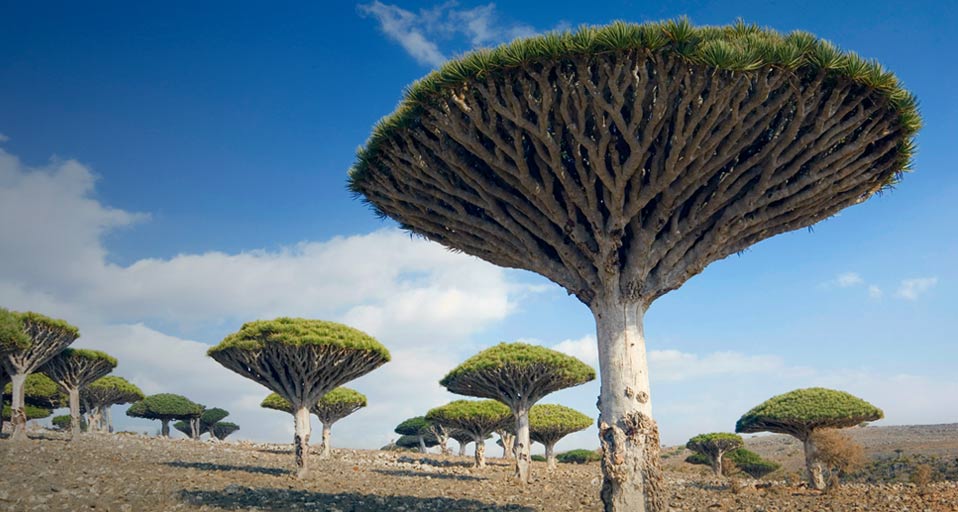
Socotra Island, Yemen

Socotra Island is an attractive natural landscape. God bestowed it with distinct bio-diversity rich in creatures and beautiful plants..

Manafaru Beach of Maldives

Manafaru Beach (5star Hotel) sits at the most northerly tip of the Maldives, idyllically set on a 14 hectares of private island within the unspoiled beauty of the Haa Alif atoll in northern Maldives, is surrounded by a colorful coral reef worth exploring and little explored by foreigners and totally un-polluted by the noise of passing speedboats and is just about the most tenuous country on Earth.

Showing posts with label China. Show all posts

The Great Wall of China

2:46 AM

As one of the Seven Wonders of the Medieval World, the Great Wall of China is an unmissable highlight of any tour of China.

The Great Wall, built over two thousand years ago, crosses deserts, grasslands, mountains and plateaus. It stretches all the way from the Shanhaiguan (Sharn-Hi-Gwarn) Pass on the east coast to Jiayuguan (Jia-Yoo-Gwarn) on the edge of the Gobi Desert in the west, more than three thousand miles away. Walk on the magnificent Great Wall to appreciate its historical significance and admire the panoramic views, whilst reflecting on the enormity of the material and labour required for its construction.

Unlike other Natural and Cultural Heritage Sites, the Great Wall embraces such broad dimensions that nothing else can compare with. It runs across Northern China from east to west, providing protection to agricultural civilisation and ancient trading routes. It spans the history of China from past to present, witnessing the rise and fall of powers and dynasties.

The Jiankou section of the Great Wall is roughly 22 kilometers in length and consists of three parts. The western part from is from Nine Eye Tower which is the most western point of Jiankou to Jiankou watch tower is 12 kilometers. The middle part from Jiankou watch tower to the Ox Horn Edge is 3 kilometers and the eastern part from Ox Horn Edge to the beginning of Mutianyu is 7 kilometers.

Many parts of the Great Wall are gone, a lot are succumbing to the elements. Some have been buried by the desert, some destroyed by people. Still, the Wall stands silently, enduring the passage of time and greeting the changes of seasons.

The Beijing sections of the Great Wall of China
There are over 10 sections of the Great Wall that are all north of Beijing within a maximum of three or four hours travelling. I have listed the six most popular or impressive sections below with the distance from Beijing then given detailed information on each of the six sections.
Badaling 80 Km
Jiankou 73 Km
Mutianyu 70 Km
Gubeikou 120 Km
Jinshanling 125 Km
Simatai 120 Km

Why the Great Wall of China is special
It is by far mankind's most extensive construction endeavor. In its heyday in the 16th and 17th centuries, it snaked 6400 kilometers or 4000 miles across northern China.

Did You Know?
When Emperor Qin Shi Huang ordered construction of the Great Wall around 221 B.C., the labor force that built the wall was made up largely of soldiers and convicts. It is said that as many as 400,000 people died during the wall's construction; many of these workers were buried within the wall itself.


Jiuzhaigou Valley of China

12:51 PM

 Jiuzhaigou is located at the southern end of the Minshan mountain range, in Jiuzhaigou County (formerly Nanping County) in the Aba Tibetan Qiang Autonomous Prefecture of northwestern Sichuan province, near the Gansu border. The provincial capital, Chengdu, is 330-460km south. The Jiuzhaigou area covers 600 to 720sq km, of which at least 240sq km is the valley, and the remainder are buffer zones.
It is said that if there should be wonderlands on the earth, Jiuzhaigou Valley must be one of them. There is no equal elsewhere that has sceneries and fables of dreamlike eloquence, or natural purities like a fairyland as Jiuzhaigou Valley.
Jiuzhaigou, which means "Valley of Nine Villages", is regarded as one of the most beautiful place in China. This nature reserve is located on the north of Sichuan province in central China, bordering on Tibet. Jiuzhaigou has become China's biggest landscape destinations, this despite having one of the highest entrance fees of any parks in China.
It is a nature reserve in the north of Sichuan, a province in south western China. It is known for its many multi-level waterfalls and colorful lakes. Stretching over the northern part of Sichuan as a jagged alpine valley, Jiuzhaigou offers a spectacular landscape with the composition of turquoise waters, bouncing streams, flying waterfalls and lush forest surrounded by snow-capped peaks. Its nickname is "Jiuzhai Paradise". The remoteness doesn't prevent it from becoming a hot tourist destination.

History
The remote region was inhabited by various Tibetan and Qiang peoples for centuries, but was not officially discovered by the government until 1972. Extensive logging took place until 1979, when the Chinese government banned such activity and made the area a national park in 1982. An Administration Bureau was established and the site officially opened to tourism in 1984; layout of facilities and regulations were completed in 1987. The site was inscribed by UNESCO as a World Heritage Site in 1992 and a World Biosphere Reserve in 1997.

Getting there
The Jiuzhaigou-Huanglong Airport is some 11 kilometers northeast of Chuanzhusi Town, Songpan County of the Aba Tibetan and Qiang Autonomous Prefecture and 88 kilometers from the entrance of the Jiuzhaigou Valley. Tourists in Chengdu can reach the valley directly by air. The Xinnanmen Bus Station and the Chadianzi Bus Station in Chengdu both provide direct daily services to the scenic area. There are also environmentally-friendly buses within the scenic area.
Opening hours
May, 1st – November, 15th 7:00am to 6:30pm
November, 16th – April, 30th 7:00am to 6:00pm

The forbidden City of China

2:29 AM

The Forbidden City is the best preserved imperial palace in China and the largest ancient palatial structure in the world.
Forbidden City
The splendid architecture of the Forbidden City represents the essence and culmination of traditional Chinese architectural accomplishment.              For almost five centuries, it served as the home of the Emperor and his household, as well as the ceremonial and political centre of Chinese government.

The forbidden City is one of

 
  • Followers